Mental Health and Wellbeing
What is mental health and wellbeing?
Mental health is a state of mental well-being that enables people to cope with the stresses of life, realise their abilities, learn well and work well, and contribute to their community. Mental Health includes our emotional, psychological and social wellbeing. It affects how we think, feel, and act and helps determine how we handle stress, relate to others, and make choices. We all have mental health. Your mental health can change on a daily basis and over time, and can be affected by a range of factors.

Mental wellbeing doesn't have one set meaning. We might use it to talk about how we feel, how well we're coping with daily life or what feels possible at the moment. Good mental health doesn't mean you're always happy or unaffected by your experiences. But poor mental wellbeing can make it more difficult to cope with daily life.
For more information on mental health - Mental health - NHS (www.nhs.uk)
It is perfectly normal for children to feel sad, worried or angry in response to different situations/triggers. There’s a difference between feeling a bit low from time to time or feeling worried about a test and having a mental health difficulty. If your child is feeling unhappy and low for a prolonged period of time, or if you have other serious concerns about your child, it may be time to seek help.
There is an enormous amount of information online that can offer advice and support to parents. We would recommend:
Young Minds – offer advice for parents about supporting children with a range of mental health difficulties. https://youngminds.org.uk/find-help/for-parents/parents-guide-to-support-a-z/
They also have a webchat service and parent helpline for detailed advice, emotional support and signposting about a child or young person up to the age of 25. Parents Helpline on 0808 802 5544. More information on Young Minds Matter can also be found on our YMM webpage here.
Place2be – offers practical tips to support children’s wellbeing and behaviour https://parentingsmart.place2be.org.uk/
School
We can offer support and advice for a number of issues or if we can’t help, we will point you in the right direction of someone else who can!
In school, we offer pastoral support sessions for children who may be experiencing social or emotional difficulties for example they may be feeling anxious, they may have experienced a bereavement, or have low self-esteem. Our Pastoral Lead is Laura Abraham and her contact details are:
Email – pacsa@shurdington.gloucs.sch.uk or mobile – 07592 626199
Other organisations
TIC+ - Teens in Crisis. Offer parent support and information and 1to 1 counselling for children aged 9 and over. They also offer free and anonymous support via a telephone and online chat. Parents can refer directly. Home - Tic+ (ticplus.org.uk)
CAMHS – Child Adolescent Mental Health Service. They are the NHS service that assess and treat children and young people with emotional, behavioural or mental health difficulties.
Early Help - Early Help is about getting timely and effective support to children, young people and their families who need it, and also focuses on how families can be supported to do things for themselves and build on their strengths. They offer provide a range of advice guidance and support directly to families, alongside a range of targeted services where more help is needed. Targeted support includes the Triple Parenting programme, Families First (Family Support Workers) and Family Group Conferencing. Families can contact Early Help via Gloucestershire Children's Helpdesk on Telephone 01452 426565 or Email Childrenshelpdesk@gloucestershire.gov.uk
Wellbeing
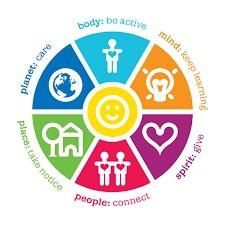
The Ways to Wellbeing are – Connect, Take notice, Care, Be Active, Keep Learning and Give. They help people take care of their mental health and wellbeing. Regularly practicing the Wellbeing Ways is beneficial for everybody – whether you have a mental health problem or not.
Why the Ways to Wellbeing Works
- Connect: Strengthening relationships with others and feeling close to and valued by others, including at work, is critical to boosting wellbeing.
- Keep Learning: Being curious and seeking out new experiences at work and in life more generally positively stimulates the brain.
- Be Active: Being physically active, including at work, improves physical health and can improve mood and wellbeing and decrease stress, depression and anxiety.
- Give: Carrying out acts of kindness, whether small or large, can increase happiness, life satisfaction and general sense of wellbeing.
- Take Notice: Paying more attention to the present moment, to thoughts and feelings and to the world around, boosts our wellbeing.
- Care: Doing things to take care of ourselves means doing things just for you. We can also care for others and for the planet.
To learn about the Ways to wellbeing, go to https://www.mind.org.uk/workplace/mental-health-at-work/five-ways-to-wellbeing/ or https://www.nhs.uk/mental-health/self-help/guides-tools-and-activities/five-steps-to-mental-wellbeing/
There are also a number of apps that can help support adults and children
Lumi Nova - Lumi Nova: Tales of courage is an intergalactic adventure game where players step into the shoes of a newly recruited Luminaut and start an exciting adventure through space - travelling to different planets, meeting new characters, solving puzzles and attempting challenges. Lumi Nova support young people to fight fears & manage worries. Whilst exploring planets, customising characters and earning treasure your child breaks their fears and worries down into manageable steps, learning life-long skills and building resilience. Lumi Nova is designed for 7 - 12 year olds (school years 3 - 7) who are having difficulties with fears and worries related to social situations, separation or phobias, but may also be helpful for young people outside this age range. More information can be found below.
Chill Panda - for ages 6 - 9. Learn to relax, manage your worries and improve your wellbeing with Chill Panda. The app measures your heart rate and suggests tasks to suit your state of mind. Tasks include simple breathing techniques and light exercises to take your mind off your worries. The app is provided free by teh NHS.
ThinkNinja - is a mental health app designed for 10 - 18 year olds. Using a variety of content and tools, it allows young people to learn about mental health and emotional wellbeing, and develop skills they can use to build resilience and stay well. This app is provided free by the NHS during the coronavirus crisis.
WRAP - Wellness Recovery Plan. Suitable for age: 4+. WRAP lets you create your own personalised plan to help keep you well by recording what makes life more difficult for you and what helps you - you can then email this to anyone you want to have a copy.
Cove - Suitable for age: 4+. Described as a musical journal for your mental health. Using music you can capture your feelings and emotions in sound to create a musical mood journal. Helps with anxiety, using journaling and melodies to improve mood.
Headspace: Meditation and Sleep Suitable for age: Any age. Children's meditations are separated into age groups 5 and under, 6 to 8, 9 to 12, 12+. Headspace is a science-backed app in mindfulness and meditation. Learn to reduce stress, build resilience and sleep more peacefully through age specific mindfulness and meditation. Download the app and after the free trial there is a subscription fee.
Smiling mind Suitable for age: 3+. Helps with anxiety and overall mental wellbeing. Using mindfulness and meditation to help young people and their parents and carers focus on areas such as stress, relationships, sleep, and concentration.
Breathe, Think, Do with Sesame - Breathe, Think, and Do with Sesame is a free app that helps kids learn to deal with frustrating situations using the "breathe, think, do" method. They'll learn to take long, deep belly breaths to calm down, think of a few strategies to handle the problem, and then do those things. They'll develop resilience as they overcome frustrations and challenges on their own. Even young children aged two to five can become more aware of their own emotions. Breathe, Think, Do features your child’s favourite Sesame Street characters to help teach them skills such as problem-solving, self-control, planning and perseverance.
Mindful Powers™ - aimed at children aged between 7 and 10. The technique of mindfulness has been very positively received by many of those who have taken the time to learn and practice it. Adults have embraced mindfulness apps to aid their learning and practice. Guided stories lead children towards calmness and focus while a timer option helps them to apply what they have learned to real life.
Calm- Calm is the perfect meditation app for beginners, but also includes hundreds of programs for intermediate and advanced users. Guided meditation sessions are available in lengths of 3, 5, 10, 15, 20 or 25 minutes so you can choose the perfect length to fit with your schedule. Enjoy 100+ guided meditations to help you manage anxiety, lower stress and sleep better. Sleep Stories are soothing tales read by well-known voices to help people unwind and fall into a deep sleep each evening. Also enjoy 10 minute guided video lessons on mindful movement and gentle stretching.
Children's Bedtime Meditations – for children aged 5-11. Anxiety, fear, and stress can lead to sleeplessness. Tiredness can amplify negative emotions. A vicious circle can form. If your child is a night time worrier kept from sleep by an unquiet mind, consider Children's Bedtime Meditations for Sleep & Calm. This app is free and comes with six meditations that can be added to with in-app purchases. The gentle stories, soothing music and soft sounds are designed to calm and distract the mind so that children can drift off to sleep naturally. Try it once, for free, and see how it works. There's nothing to lose and a good night's sleep to gain.
For Me – suitable for ages 5-11. There are many different things than can impact a child's mental health. Even the most attentive parents might not be fully aware of any anxieties or problems that their children might have. Made and supported by the charity Childline, For Me provides help and guidance for those that need it, both within the app and through easy connection to a counsellor. This is a free app, so encourage your child to have it on their device. That way, if ever they do need help, they have a starting point and it is one that has always been there, not one that has been pushed on to them because of their problems. Even if they do not need it for themselves, it might help them support a friend who does.
The Zones of Regulation - What do you get when a game developer works with an occupational therapist? Zones of Regulation, it seems. The game developer's sense of style and fun engage children with this app while the occupational therapist's influence guides children towards better control of their emotions.
Children identify the coloured 'zone' that they are in which corresponds to different groups of emotions. For example, anger is in the red and sadness in the blue. The app then guides children through these emotions and how to deal with them. The intention is to take children through the negative emotions into the calm and content ones. There are not many apps that link a child's love of games with mental wellbeing so this is one to check out

|
Lumi Nova parent-information-letter | [pdf 96KB] |

|
