Computing
Curriculum documents

|
Computing Curriculum - Intent, Implementation and Impact | [pdf 32KB] |

|
|
|
Computing Curriculum - 2025 to 2026 | [pdf 65KB] |
|
|
|
Computing - National Curriculum Coverage | [pdf 280KB] |
|
|
|
Computing - Key Vocabulary | [pdf 118KB] |
|
|
|
Computing-Progression of skills and knowledge | [pdf 233KB] |
|

|
Computing Reading Spine | [pub 724KB] |
|
Computing Intent
By the end of Key Stage 1 and 2, children at Shurdington will have covered the subject content of the National Curriculum through use of iPads, laptops, and practical Computing Activities using the Kapow scheme of work.
The Computing Curriculum supports three areas of the ‘Shurdington Experiences’ part of the curriculum:
- Excel outside of academia.
- Help others.
- Feel good about themselves and feel proud.
By providing a high-quality Computing education and building children’s skills and digital competency, the following will be achieved:
- Pupils to use computational thinking and creativity to understand and develop the world.
- Provide a high-quality computing education that equips pupils to use computational thinking and creativity to understand and develop the world.
- Use Computing within other areas of the curriculum such as mathematics, science and design and technology.
- Understand how digital systems work and how to put this knowledge to use through programming.
- Allow pupils become digitally literate to express themselves and develop their ideas through, information and communication technology.
- Be able to present and share data and information in a number of different ways.
- Ensure children remain safe online in the face of current online and social media advances.
- Give the children an opportunity for Computing enrichment through computing-based clubs.
Computing Implementation
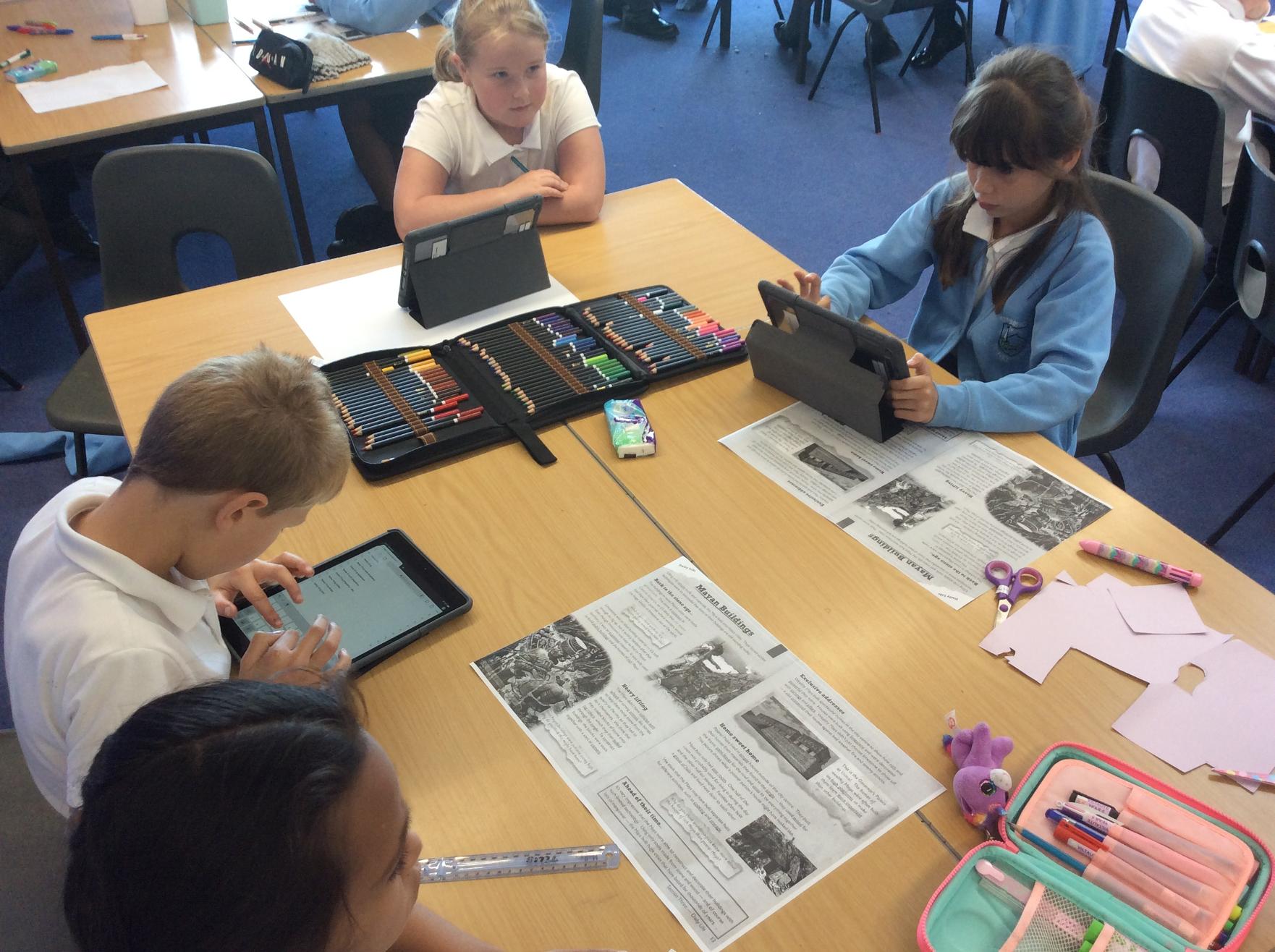
At Shurdington, our Computing lessons are taught fortnightly for 1 hour and 30 minutes. Kapow is the scheme that is used within the school which ensures that the three strands of computing are taught: computer science, information technology and digital literacy. These strands are taught within five further areas to ensure full coverage of the National Curriculum as well as ensuring that a progressive approach happens each year where children build on previous knowledge. The key areas are computer systems and networks, programming, creating media, data handling and online safety. These units are taught with the use of iPads and laptops which are readily available in our school. Online safety is taught throughout the year and is the first lesson taught in computing each term. For the academic year of 2023 to 2024, all classes will follow a catch up scheme to ensure that the children have learnt and understood prior or missed knowledge and skills before beginning the full scheme rotation in 2024 to 2025.
Computing Impact
The impact for the Computing curriculum will be measured through pupil voice, engagement in clubs, computing quizzes and through teacher assessment both in class and after completing specific units to assess if children are working below, at age-appropriate expectations or above expected standards.
