Reading
At Shurdington Primary School we believe that reading is the golden thread to everything we do. We are committed to developing fluent and competent readers with a love for reading. We believe that the whole school community have a part to play in this: children, parents, and all members of the staff team. We recognise the importance of developing a passion for reading, which will enable to children to be successful learners in all areas of the curriculum, and in their lives beyond Shurdington Primary.
Curriculum documents

|
Reading Intent, Implementation and Impact | [pdf 1004KB] |

|
|
|
Reading prog doc - including eyfs | [pdf 375KB] |
|
|
|
Reading at Shurdington Primary School | [pdf 999KB] |
|
|
|
PSHE Reading Spine | [pdf 712KB] |
|
|
|
Music Reading Spine | [pdf 129KB] |
|
|
|
MFL Reading Spine | [pdf 220KB] |
|
|
|
History Reading Spine | [pdf 353KB] |
|
|
|
Geography Reading Spine | [pdf 1018KB] |
|
|
|
Computing Reading Spine | [pdf 213KB] |
|
|
|
Science reading Spine | [pdf 1MB] |
|

Reading Intent
Intent:
The intent of our Reading curriculum is to:
- Develop phonetic skills which lead to blending and reading fluently.
- Develop children’s love for reading and encourage reading for pleasure.
- Ensure that all children are confident, independent and fluent readers.
- Expose children to a wide range of texts, genres, and authors, which will enable them to develop as lifelong readers, and be inspired to read.
- Equip all children with the reading skills needed to successfully support their acquision of knowledge.
- Develop inquisitive readers who ask questions about a text and infer meaning.
- Give children opportunities to read in English lessons, but also in the wider curriculum too.
Reading Implementation
Phonics
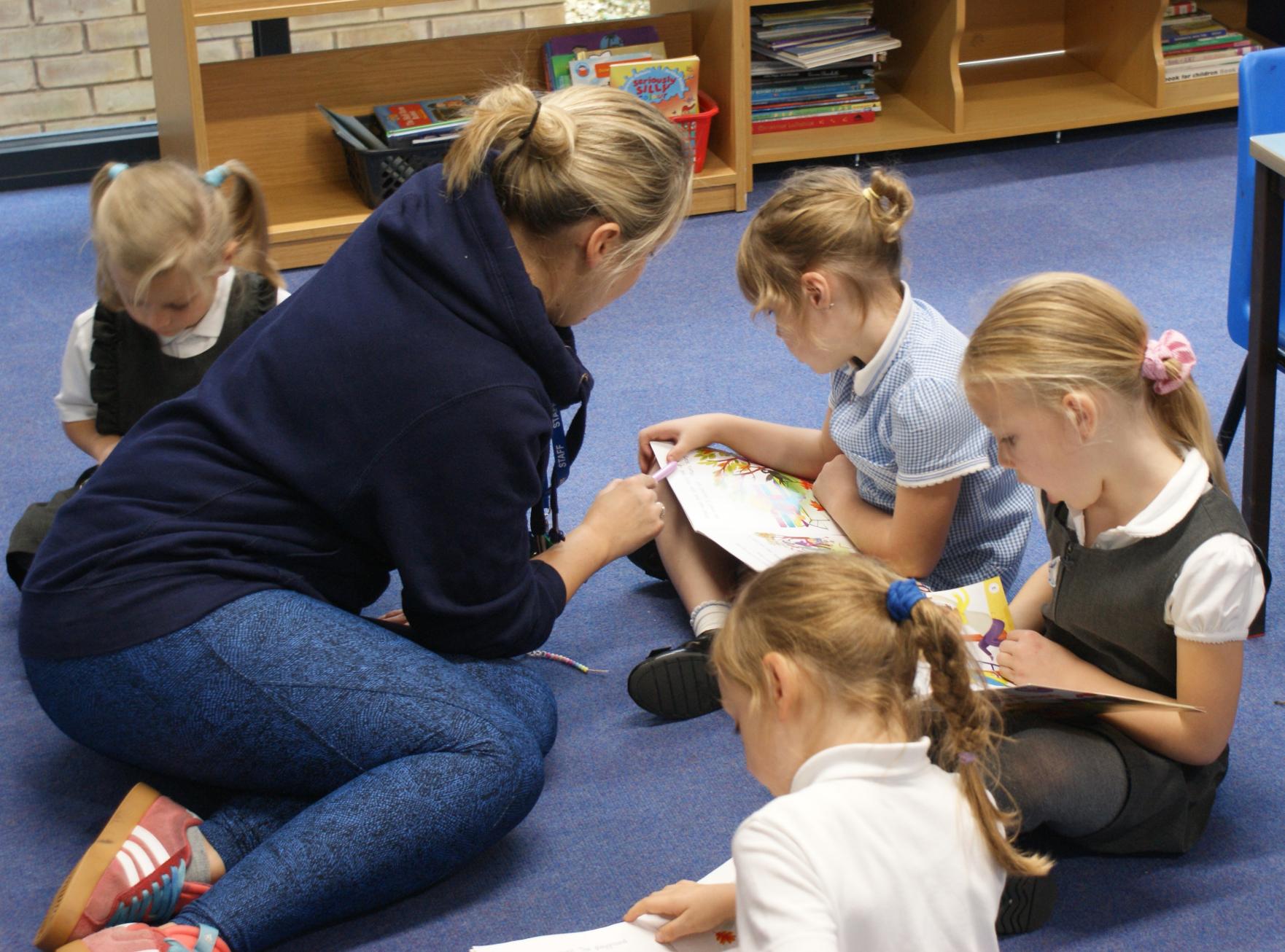
At Shurdington we use Essential Letters and Sounds (ELS) to teach phonics. To ensure all children learn to read well, quickly, children learn Phonics from the very start of Reception. In Reception and Year 1, Phonics is explicitly taught every day during a dedicated slot on the timetable. Throughout the day, children use their growing Phonic knowledge to support them in other areas of the curriculum and have many opportunities to practise reading decodable texts precisely matched to the phonic knowledge. This includes reading 1:1 with a member of staff, with a partner during paired or guided reading, and during whole class reading sessions. We know that reading is a fundamental life skill and ensure that all children leave our school able to read well.
ELS is a whole class teaching model. This means that every single pupil has the same opportunities when learning to read. Learning to read well, early, is a priority for every child. Children who may find it harder to learn how to read are given extra support from their teacher every day. We ensure that all children to learn to read well and keep up rather than have to catch-up.
We follow the ELS progression and sequence. This allows our children to practise their existing phonic knowledge whilst building their understanding of the ‘code’ of our language. As a result, children can tackle any unfamiliar words that they might discover. We teach children more rarely used GPCs through the ELS progression. This means that they can decode and read more words with increased fluency.
At our school we begin by teaching the single letter sounds before moving to diagraphs
(two letters spelling one sound), trigraphs (three letters spelling one sound) and quadgraphs (four letters spelling one sound).
We teach children to:
- Decode by identifying each sound within a word and blending them together to read fluently.
- Encode by segmenting each sound to write words accurately.
ELS is designed on the principle that children should ‘keep up’ rather than ‘catch up’. Interventions are delivered within the lesson by the teacher and any child who is struggling with the new knowledge can be immediately targeted with appropriate support. Where further support is required, 1:1 intervention is used where needed. These interventions are short, specific and effective. Where further phonic support is required in Key Stage 2, this is timetabled to ensure that any child rapidly catches up.
Reading Books
At Shurdington we ensure that the children read books that are suitably pitched to build their confidence, and their fluency. To do this we use Oxford University Press books and provide the children with a number of books.
In EYFS and KS1 the children receive a fully decodable book and a library book. Fully decodable books are carefully matched to the phonics teaching taking place in classrooms (using ELS), and to individual children’s phonic knowledge to ensure that they consolidate their most recent teaching and learning at home. We ask that fully decodable books are read four times each week to build a child’s fluency. Library books are also sent home weekly with the children. These books are chosen by the children, from our school libraries. These books are not monitored because we want the children to have an opportunity to read for pleasure. The children may not be able to read these books, and therefore these are to be read with an adult.
In KS2 children continue their reading journey with Oxford University Press books. They are assessed using the Oxford Reading Assessment and levelled books provide the right amount of challenge for each child. These progressive levels build fluency, comprehension and stamina and lead to children becoming successful, fluent readers. As above, KS2 children have opportunities to select a library book. Again, these books are not monitored, but allow the children to read books based on their own preferences and interests. Children in KS2, who have gaps in their phonic knowledge, will read fully decodable books which are matched to their phonic knowledge during phonics and reading interventions.
Guided Reading
At Shurdington Primary School we want to give the children exposure to a wide range of texts, author and genres which will enable them to develop as lifelong readers, and be inspired to read. As a result, we have selected high quality texts which progress throughout the school, to support the teaching of reading. Teachers plan guided reading sessions using fiction, non-fiction and poetry, and where possible we make links with other subject and curriculum areas. We teach guided reading every day and use VIPERS to develop comprehension skills.
- Monday – Whole class reading and ‘pre-teach’ session.
- Tuesday – Vocabulary building
- Wednesday – Explanation and Retrieval
- Thursday – Inference and Prediction
- Friday – Sequence or Summarise
Regular teacher assessments, and ‘pre-teach’ sessions, ensure that all children are supported to access the same text.
Children in Reception and Year 1 complete a guided reading carousel which provides them with further opportunities to practise reading decodable texts and develops their comprehension skills using VIPERS activities.
Class Novel
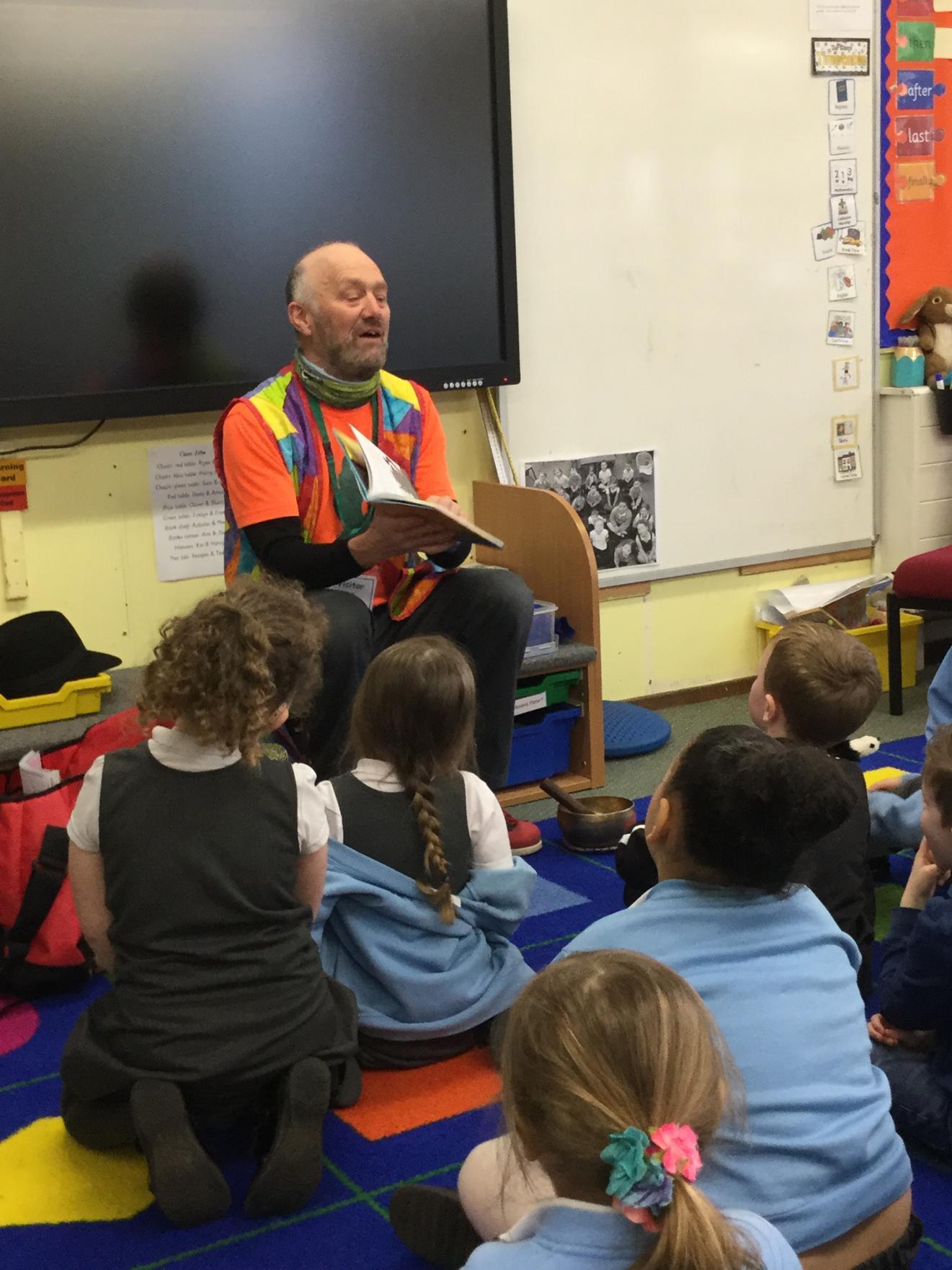
We are keen to expose children to texts that they would not otherwise select or read. As a result, for 15 minutes at the end of every day the children will listen to the teacher reading a class novel. These books have been carefully selected to help the children gain experiences, improve language and vocabulary skills, and stimulate their imaginations!
Shurdington Literature Festival
We are dedicated to inspiring the children to be life-long readers, and as a result, every March is dedicated as ‘Shurdington Literature Festival’. During this period, we celebrate World Book Day, Poetry Week, International Women’s Day and Shakespeare Week. We want to give our children the opportunity to visit a library and book shop; to hear award winning authors and poets speak; and to have the opportunity to read and purchase books that inspire them! Shurdington Literature Festival is a key part of the school calendar and we believe it gets better and better each year!
Libraries
At Shurdington we are lucky enough to have two large libraries - both wonderful places where pupils can come to read, enjoy, and borrow books to take home. The children are given weekly opportunities to visit these and change their books. The school Librarians are on stand-by once a week to help the children with their book choices and help keep the libraries neat and tidy. We are passionate about filling our libraries with new, exciting, high-quality and culturally diverse books, and we are always seeking out opportunities to do so.
Reading Imapct
At Shurdington we want all children to be able to speak confidently about their reading experiences, skills, and the texts they have studied. We will know that they are engaged in reading when they:
- Enjoy their guided reading sessions and read for enjoyment.
- Show depth of understanding through comprehension skills.
- Display resilience when reading challenging texts.
- Talk positively about reading, sharing and reflecting on their learning and how it related to real life situations.
Reading impact will be shown in:
- Attainment records
- Progress records
- Performance management targets
- Guided reading books
- Intervention records
Summative assessment of reading is through external tests such as SATs (in Year 2 and 6) and The Phonics Screening Check, as well as in school assessments such as optional SATs or NFER papers.
Children are assessed on their phonic knowledge in week 5 of each half term using the ELS termly assessments which ensures that any specific gaps can be targeted immediately; and the Phonics Screening Check in Year 1.
Formative assessment is completed using the above, our insight tracking system, guided reading sessions and book band progression.
Guided reading structure:
|
Day |
Activity/Skill |
|
Monday |
|
|
Tuesday |
|
|
Wednesday |
|
|
Thursday |
|
|
Friday |
|
Our Reading Spine
|
|
YR Reading spine | [pdf 270KB] |
|
|
|
Year 1 Reading Spine | [pdf 3MB] |
|
|
|
Year 2 Reading Spine | [pdf 2MB] |
|
|
|
Year 3 Reading Spine | [pdf 2MB] |
|
|
|
Year 4 Reading Spine | [pdf 1MB] |
|
|
|
Year 5 Reading Spine | [pdf 3MB] |
|
|
|
Year 6 Reading Spine | [pdf 3MB] |
|
|
|
Shurdington - Black History Month Reading Spine | [pdf 221KB] |
|